HOW LONG WILL IT TAKE BRETT LASALA AND SNOT ROCKET TO REACH THE TOP OF OUTLAW H-PATTERN RACING?
Brett LaSala does not enter a class simply to fill a lane. After turning Snot Rocket into one of the most recognizable and successful modern Mustang drag cars in the country, LaSala is preparing for an entirely new challenge: Outlaw H-Pattern stick shift racing.
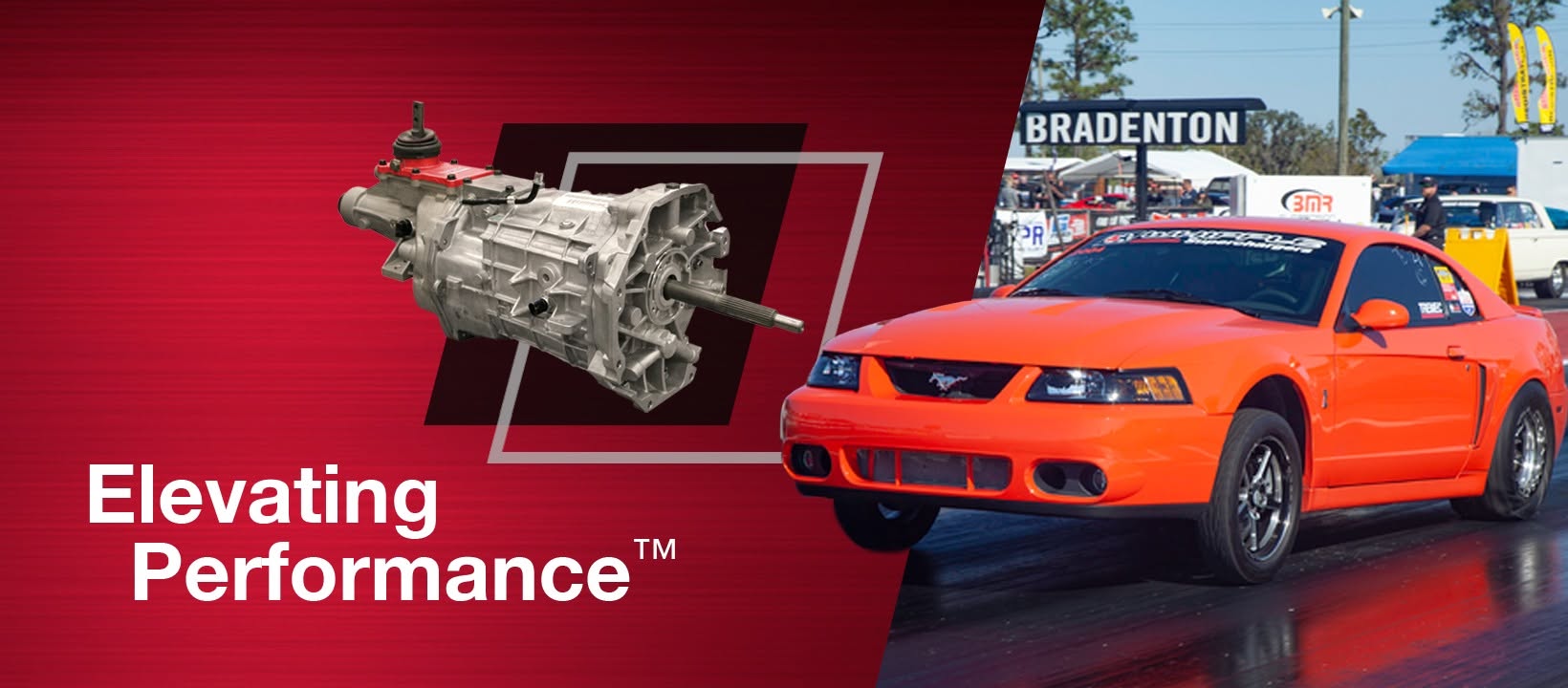
The move puts LaSala behind a clutch pedal and a Grannas Racing ATLAS transmission built on TREMEC Magnum XL architecture. Nth Moto is handling the ATLAS build, while EZ Motorsports is responsible for the multi-disc clutch combination.
Snot Rocket already has the power, engineering and team required to compete at the highest level. The bigger question is how quickly LaSala can master the launch, clutch management and gear changes required to beat racers who have spent years perfecting the H-pattern combination.

Race results, how-to guides, and the stories worth knowing - straight to your inbox.
How We Built This List
This is not an official championship ranking. It is MustangMagazine’s list of five proven H-pattern competitors who represent the speed, experience, engineering and execution LaSala will have to overcome as he enters the class.
Outlaw stick shift racing does not operate under one universal national rulebook. Tire limits, field sizes, qualifying formats and even chassis requirements can change from one promoter to another. The drivers below were selected because of their demonstrated performance in major stick-shift events and their broader standing within the H-pattern community.
The class has exploded in popularity over the last several years, helped in part by appearances from creators like Cleetus McFarland, whose participation introduced millions of fans to Outlaw H-Pattern racing. While the spotlight has grown, so has the level of competition.
1. Joel Grannas
Joel Grannas is the most obvious benchmark because he brings together driving ability, technical knowledge and firsthand experience with the same transmission family being installed in Snot Rocket.
Grannas Racing introduced the ATLAS after Nth Moto and PGS Transmissions spent years developing and refining a full dog-engagement H-pattern gearset for extreme-power applications. Grannas then proved the package in one of the quickest stick-shift programs in the sport.
That makes Grannas more than another name on the qualifying sheet. He understands the transmission, clutch-assisted shift strategy and race-day demands of the combination at a level few competitors can match. LaSala may be using ATLAS hardware, but beating the racer who helped establish it as a front-running package would be a major statement.

2. Nick Cole-Mann
Cole-Mann has established himself as one of the quickest and fastest H-pattern racers in drag racing, setting records and continually raising the bar for what a manually shifted race car is capable of. His performances have helped redefine expectations for modern stick-shift racing, proving that H-pattern cars can compete at an incredibly high level.
For any driver entering the class, Cole-Mann represents one of the toughest measuring sticks. His combination of speed, consistency, and record-breaking performances makes him one of the biggest obstacles standing between Snot Rocket and the top spot.
If Brett LaSala wants to establish Snot Rocket as one of the premier H-pattern cars in the country, he’ll eventually have to line up against racers like Cole-Mann who have already proven they can win at the highest level.

Honorable mention: Jonathan Atkins
Jonathan Atkins belongs near the top of any modern Outlaw H-Pattern conversation because speed alone does not win this class. A driver must repeatedly manage the clutch, keep the car in the groove and complete every shift under enormous drivetrain load.
Atkins has built a reputation as one of the racers capable of putting together complete passes when the pressure is highest. That consistency is exactly what LaSala will have to develop as he transitions from an automatic combination into a class where the driver is directly involved in every gear change.

3. Sean Madden
Sean Madden isn’t just a threat in Outlaw stick-shift racing, he’s the benchmark. At TX2K 2026, Madden reset the world record for the fastest H-pattern stick-shift Corvette, laying down a 6.555 at 214.96 mph in his ProCharger-boosted C7 “Jango” and taking the overall stick-shift win against the toughest field in the country.
That kind of pass doesn’t happen by accident. In a class where one missed shift ends your weekend, Madden pairs record-setting power with the clutch-foot precision to actually put it on the ground. And he’s not done: he’s building a small-block Z06 that has the potential to become the quickest and fastest H-pattern car in the world.
If Brett LaSala wants the No. 1 stick-shift title, the road almost certainly runs through Sean Madden.

Honorable mention: Josh Manning
Josh Manning has shown the kind of front-running pace that can immediately reshape a qualifying sheet. In a heads-up class, that matters because the quickest qualifiers gain the most favorable positions on a pro ladder and force the rest of the field to chase their number.
Manning represents the raw-performance side of the challenge. Even if Snot Rocket adapts quickly, LaSala will still have to find enough speed to run with racers who already understand how their cars respond through the launch, shift recovery and the long pull through the quarter-mile.

4. Jon Rogers
Jon Rogers represents the type of racer who can become dangerous over the course of an entire event. Stick shift races are often decided by execution rather than one spectacular qualifying pass.
Drivers who consistently stage correctly, protect the clutch, make clean gear changes and avoid mechanical mistakes tend to stay alive deep into eliminations. That type of round-by-round discipline will test LaSala while he builds experience with an entirely different driving process.

5. Ryan Pederson
Ryan Pederson rounds out the list because experience matters tremendously in a class where the driver must balance aggression with mechanical sympathy.
A fast car can still lose through tire spin, a missed shift, an overheated clutch or a small staging mistake. Proven competitors understand how to manage those risks across qualifying and eliminations. LaSala’s program may arrive with tremendous potential, but racers such as Pederson already know how quickly an H-pattern weekend can turn.

Honorable Mention: cleetus mcfarland
Cleetus McFarland has helped introduce an entirely new audience to Outlaw H-Pattern racing. While many fans know him for his YouTube content, he’s also proven he’s willing to line up against some of the quickest stick-shift racers in the country rather than stay in his own lane.
Every time Cleetus enters the field, the spotlight on the class grows. His willingness to race against established veterans has brought more eyes, more competition, and more excitement to H-pattern racing than perhaps anyone in recent years.
For Brett LaSala, racing alongside Cleetus won’t just mean competing against another talented driver. It means sharing the stage with one of the biggest personalities in motorsports while trying to prove that Snot Rocket belongs among the elite stick-shift cars in the country.

The Rules Matter More Than Ever
Calling a car an “Outlaw H-Pattern” entry does not automatically tell readers which exact rules it will race under. There is no single rulebook controlling every major stick-shift event. The promoter’s published rules must always be checked before describing a car as legal for a particular race.
That distinction is especially important for Snot Rocket because LaSala has announced plans that include the Outlaw Stick Shift Challenge, FL2K and the World Cup Finals. Those events may share the same H-pattern spirit while using different field structures, tire limits and technical requirements.
Common Rules Across Major H-Pattern Events
- An H-pattern manual transmission is required.
- The clutch must be operated by the driver’s foot.
- The driver must manually make the gear changes.
- Air and electric shifters are prohibited by the major rulebooks reviewed for this article.
- Sequential transmissions are prohibited in the Mod Nationals and Street Car Braggin’ Rights rules.
- A strain gauge may be permitted for an ignition or timing cut during the shift, depending on the event.
- NHRA safety requirements apply at Mod Nationals and the NOPI Street Car Challenge.
Mod Nationals Stick Shift Rules
The current Mod Nationals format uses quarter-mile, heads-up racing on a .400 Pro Tree. The field is split after qualifying, with positions 1 through 8 entering Outlaw, positions 9 through 24 entering Pro and positions 25 through 40 entering Street. Outlaw has no breakout, while the Pro and Street categories use qualifying-based breakouts.
The published Mod Nationals rules also require Ford power, a factory-based chassis, no full tube chassis and a maximum tire of a 28×10.5 slick or 275 radial. A foot-operated clutch and manually shifted H-pattern transmission are mandatory. Pneumatic, hydraulic and electric shifting are prohibited, as are sequential transmissions. A strain gauge is allowed only for an ignition or timing cut.
Source: Mod Nationals Stick Shift class rules
Street Car Braggin’ Rights Rules
Street Car Braggin’ Rights also uses quarter-mile, heads-up competition on a .400 Pro Tree. Its field is split by qualifying position into Outlaw, Pro and Street. The published rules allow any H-pattern clutch-assisted transmission, prohibit sequentials and prohibit air or electric shifters.
Its tire rule allows up to a 275/60/15 radial or a 28.0×11.5W slick. That difference alone shows why a technical statement should be tied to a particular event rather than presented as a universal Outlaw H-Pattern rule.
Source: Street Car Braggin’ Rights Stick Shift rules
NOPI Street Car Challenge Rules
The NOPI Street Car Challenge lists its Stick Shift category as a 16-car outlaw field using heads-up, single-elimination racing on a Pro Tree over the quarter-mile. It requires an H-pattern clutch-assisted transmission and a clutch manually operated by the driver’s foot. Air and electric shifters are prohibited, while a strain gauge is permitted.
NOPI does not permit a full tube chassis and limits tires to a 28×10.5W slick or 275/60/15 drag radial. Its rules otherwise allow broad freedom in body, suspension, electronics and engine or power-adder combinations, subject to its stated big-block exception.
Source: NOPI Street Car Challenge class rules
World Cup Finals
The World Cup Finals lists Stick Shift as a quarter-mile, 16-car, heads-up category in its 2026 rulebook. Competitors should use the event’s current posted rulebook as the final authority for technical legality and race procedures.
Source: World Cup Finals 2026 rulebook
Why Brett LaSala Could Rise Quickly
LaSala will face a real learning curve, but this is not a program starting from zero. Snot Rocket has already run 5.879 at 242.76 mph in the quarter-mile and LaSala’s team has repeatedly shown it can adapt to new combinations, analyze data and win against deep fields.
LaSala also enters stick shift racing with experienced companies behind the drivetrain. The ATLAS package combines years of development from Nth Moto and PGS Transmissions with Grannas Racing’s application of the system to the TREMEC Magnum, Magnum XL and related T56-based platforms.
Power is unlikely to be the problem. The real race will be against time: how quickly can LaSala learn the clutch, launch cleanly, make every shift and repeat the process when eliminations begin?
Source: Brett LaSala Racing statistics

So, Where Does Snot Rocket Stack Up?
On potential alone, Snot Rocket immediately belongs in the conversation. LaSala has the power, chassis, data program and technical support to become a serious threat. However, H-pattern racing will punish every small mistake, and the established field will not give him time to learn quietly.
The first goal should not be declaring Snot Rocket the new number-one stick shift car before it makes a pass. It should be watching how quickly LaSala closes the gap to racers who have already mastered the discipline.
Additional Sources: